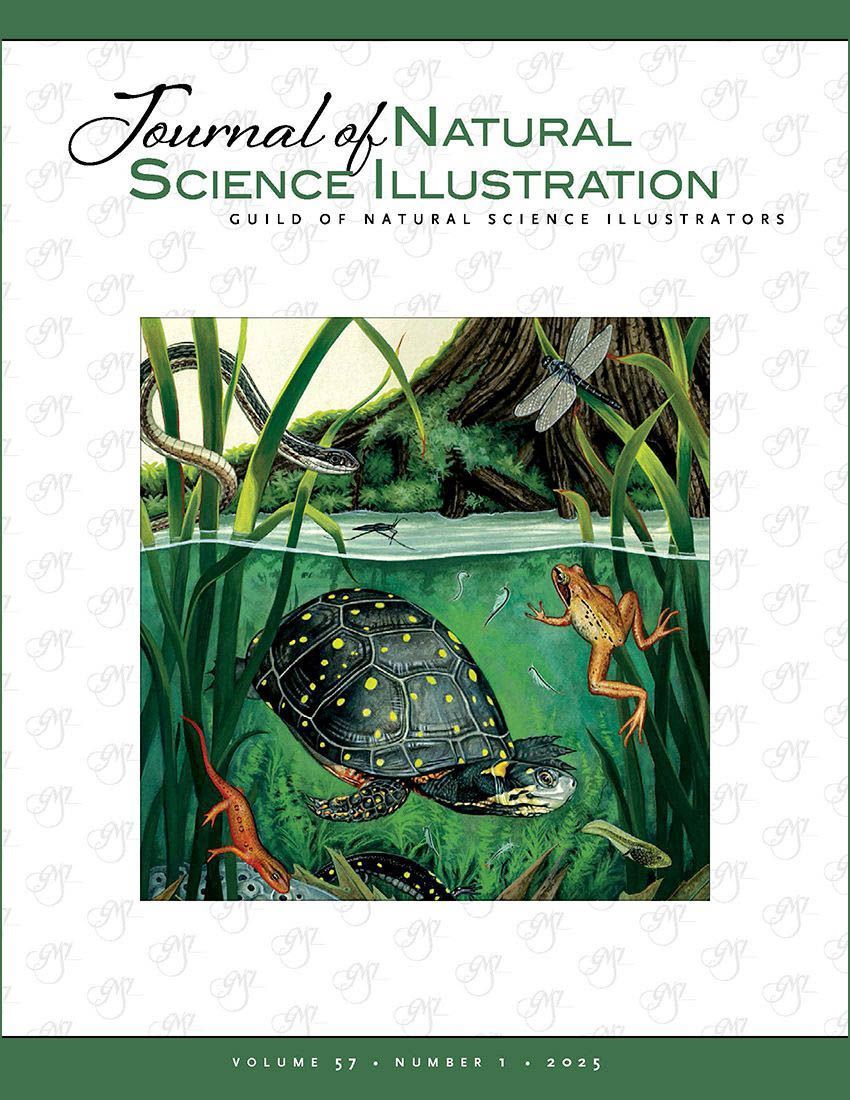
Welcome to the first edition of 2025!
Welcome to the Journal of Natural Science Illustration Volume 57, Number 1, 2025. Bea Martin opens the issue with her reflections on sketching in Alaska’s Kootznoowoo Wilderness, blending sustainability and deep observation. Kalliopi Monoyios, along with Kirsten Carlson, Taina Litwak, Tania Marien, and Fiona Martin, delivers a compelling argument for the power of visuals in climate communication and the vital role of visual science communicators in today’s world. Emma Regnier and Karin von May celebrate the creativity and precision of CSUMB’s 2024 science illustration graduates, while Stephen DiCerbo invites us to reconnect and learn at the upcoming Visual SciComm Conference. We also meet incoming GNSI president Deb Haines, profiled by Deborah K. Haines, whose career bridges medicine, veterinary science, and leadership.
Log into your account to view the Journal: JNSI 2025 Vol. 57, No. 1
Not yet a subscriber? To view the issue for free, become a GNSI member today!

Editor’s Note — Fiona Martin
Fiona Martin reflects on the evolving role of science illustration, emphasizing its power to communicate complex ideas in an emotionally resonant, accessible way, highlighting the importance of this now in the midst of a challenging and unpredictable political and social climate.
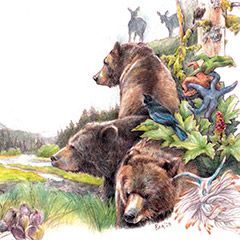
Sketching On Location — Bea Martin
Bea Martin recounts her time as an artist-in-residence in Alaska’s Kootznoowoo Wilderness, where she embraced minimal equipment and sustainable practices. Her experience highlights the power of daily sketching and immersion in nature to build observational skills and deepen environmental awareness.
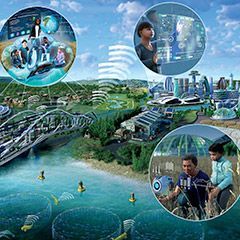
Visuals as a Catalyst for Climate Science Communication, Part 1 — Kalliopi Monoyios, Kirsten Carlson, Taina Litwak, Tania Marien, Fiona Martin
This comprehensive article explores how visual science communicators make climate data accessible, memorable, and emotionally compelling. It emphasizes the urgent need to integrate illustrators into science communication teams across academia, government, and media to foster public engagement and drive action.
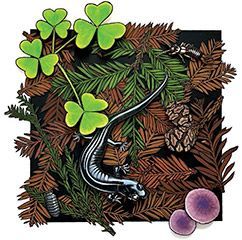
Illustrating Nature: CSUMB Science Illustration Graduate Program Class of 2024 — Emma Regnier and Karin von May
This feature showcases the diverse, imaginative work of graduates from California State University Monterey Bay’s science illustration program. The students blend technical skill and artistic flair to interpret complex natural subjects, demonstrating the next generation’s creative potential.
A Look Ahead at the 2025 Visual SciComm Conference — Stephen DiCerbo
Stephen DiCerbo previews the upcoming in-person GNSI Visual Science Communication Conference at Bridgewater State University. The article highlights workshops, networking opportunities, and a renewed sense of community after years of virtual-only events.