
Pages from my Sketchbook — Jennifer Lucas
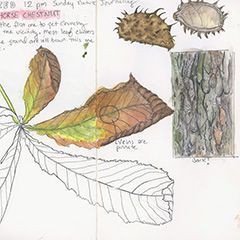
Jennifer Lucas shares sketchbook pages that act as a visual diary of daily observations, walks, travels, and teaching moments. Her sketches blend memory, place, and personal reflection, demonstrating how sketchbooks support both artistic growth and connection to the natural world.
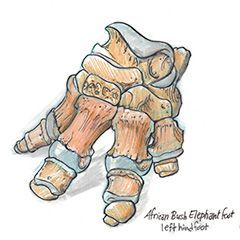
Teaching Comparative Vertebrate Anatomy — Dino Pulerà
Dino Pulerà describes designing and teaching a new online course on comparative vertebrate anatomy for artists, combining traditional drawing, digital media, and classic anatomical references. He details the curriculum, resources, challenges of remote teaching, and his process of creating original anatomical illustrations to deepen student understanding.
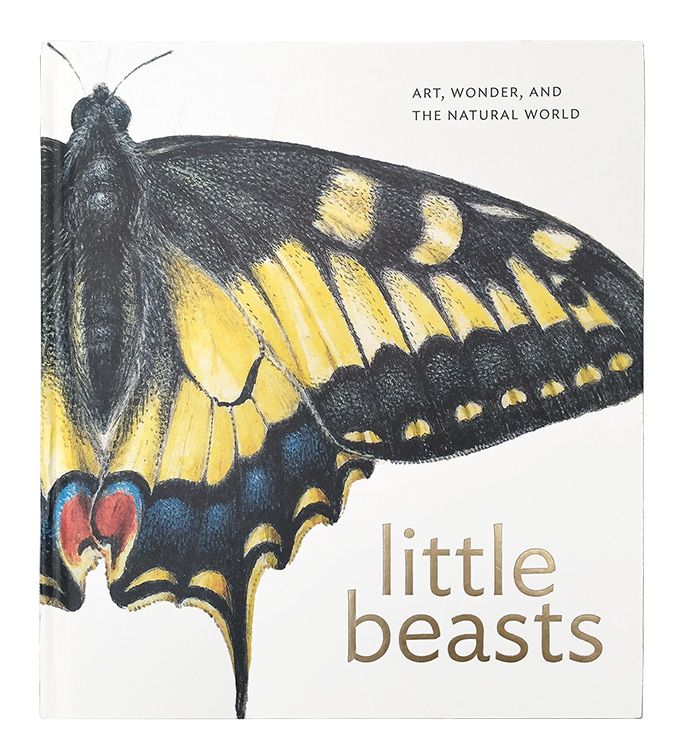
Book Review: Little Beasts: Art, Wonder, and the Natural World — Review by Julianne Snider (open access)
This review explores a richly illustrated book examining early European natural history and the detailed insect and animal paintings of Joris Hoefnagel and Jan van Kessel. Julianne highlights how the book contextualizes Renaissance curiosity, the growth of scientific illustration, and the artistic techniques that shaped early natural-history documentation.

Visuals as a Catalyst for Climate Science Communication, Part 2 — Kalliopi Monoyios, Kirsten Carlson, Taina Litwak, Tania Marien, Fiona Martin
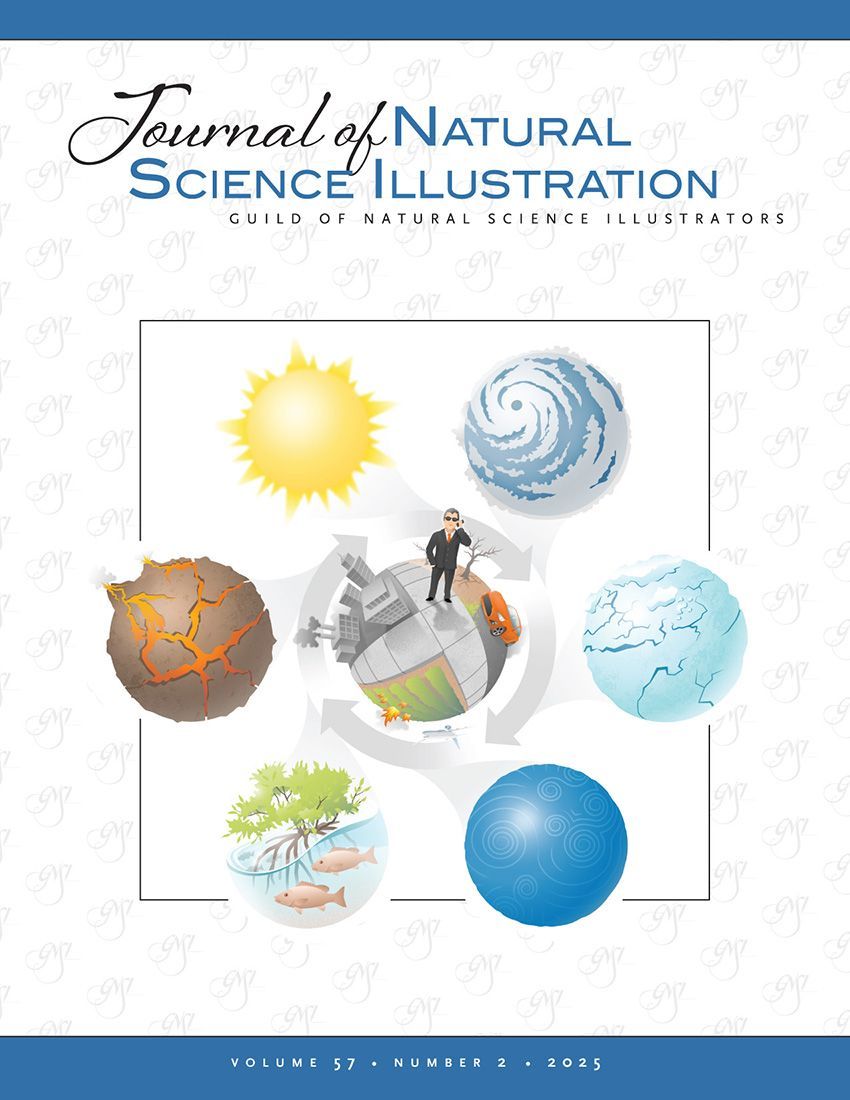
The authors explain what makes climate visuals effective, emphasizing emotional engagement, cultural relevance, transparency about scientific processes, and the use of metaphor and storytelling. They argue that thoughtful visual communication can combat climate fatigue, build trust, and inspire action when paired with community-centered approaches and hopeful solutions.
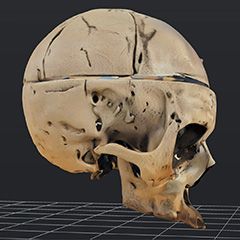
Resurrecting the Past: From Medieval Skulls to 3D Faces — Victoria Kayser-Cuny
Victoria Kayser-Cuny outlines her interdisciplinary process for reconstructing a medieval skull using osteometry, ancient DNA analysis, observational drawing, 3D modeling, and facial reconstruction techniques. She also introduces her broader research into “genomathematics” and mirror-genome models, which expand illustration into a tool for visualizing alternative evolutionary possibilities.