

Book Review - The Album of
Plant Families: An Illustrated Exploration of Nature's Beauty and Bounty
Reviewed by Kathleen Garness
Kathleen Garness • May 22, 2026 / Unless otherwise noted, all images © Wendy Hollender
People love to look over albums of their family’s photos, and, being a botany geek, I had a similar affection reading this book, The Album of Plant Families: An Illustrated Exploration of Nature’s Beauty and Bounty, for the first time. The concept of an album of plant families is not new, but Wendy Hollender’s intention is to make clear connections here between plants and people, with the emphasis on 22 vascular plant families of economic use plus a number of species of fungi, which are not plants but have inestimable value for their associated plants as well as to humans. About 90% of all plant species have obligate relationships with fungi. Fungi’s intrinsic importance in all ecosystems includes helping to help capture and distribute nutrients in the soil to plants.
Lavishly illustrated, the book is not a scientific treatise on plant families, but neither is it a typical coffee table book of botanical art. Rather, it is an invitation into intimacy with plants, to be welcomed inside their home as a valued guest, and enjoy conversations—inserted at the end of each family chapter—with experts in the field who love plants as much as Hollender does. She tells us she wanted the paintings “to be about connection, the plants relating to each other—not unlike what human family members do when they gather. In my family we hug and sit close to each other.” As plant family members, Hollender “allowed the plants’ leaves to wrap around one another and the roots to reach out to other plants on the page.” Through international travels to her wide-spread family members and informed by close observation, Hollender has developed cherished relationships with plants and their places over time, “Every time I visit a plant that I have drawn
in the past, it is like coming home for a family gathering. The familiarity warms my heart.”
One of Hollender’s 12 by 16 inch illustrations of her selected plant families (p. 11) suggests the family’s size in number of genera and species. Working in colored pencil and watercolor from real plants and occasionally photos when necessary to amplify her understanding, Hollender comments that she eventually “could see why sea holly is in the carrot family rather than the sunflower family...I imagined these plants from different climate regions would enjoy meeting each other inside my painting, like long lost cousins at a family reunion. I wondered if they had originated together at one time and then through dispersion and travel adapted and changed all over the world.”
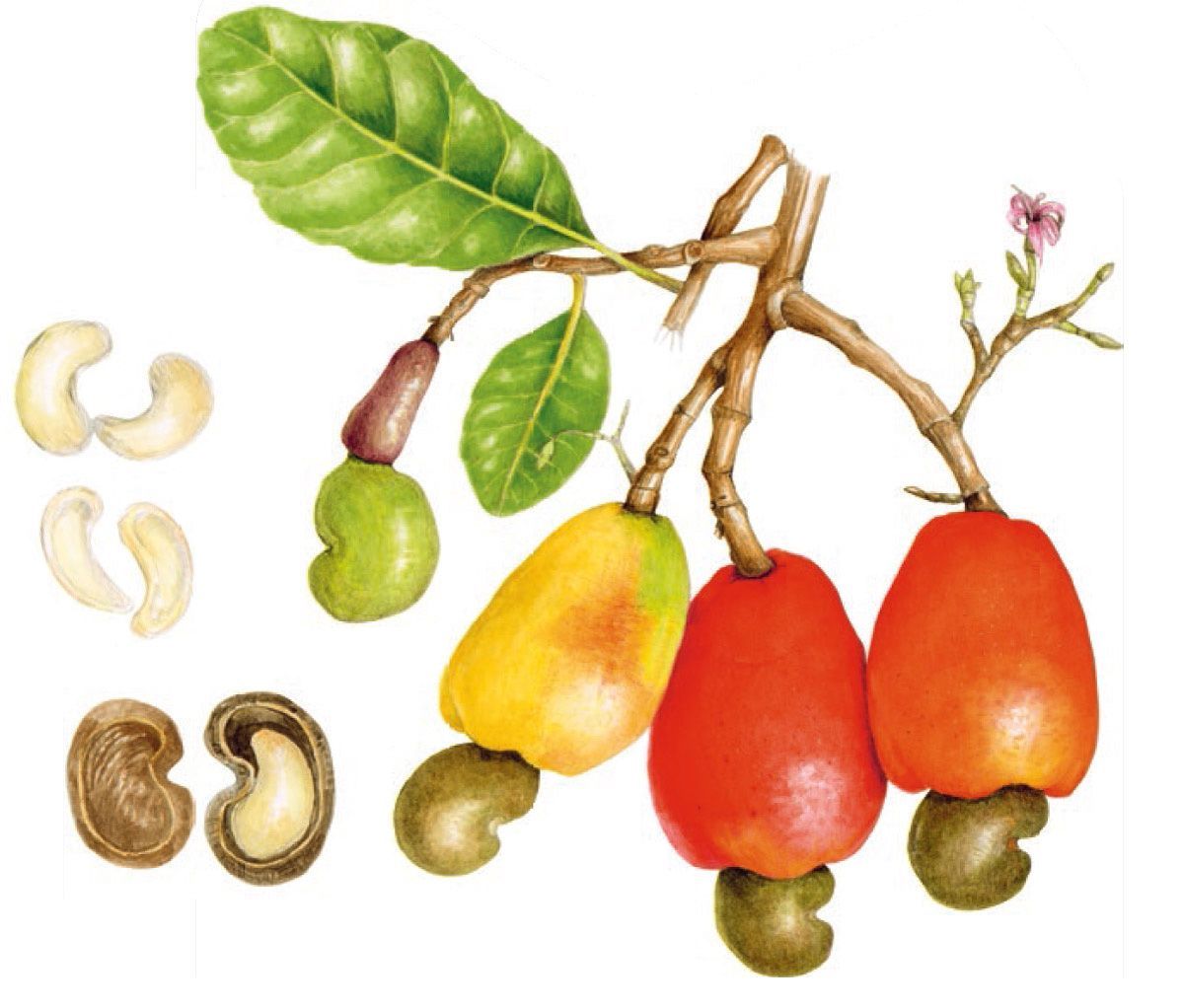
Image: Cashew fruits and nuts (Anacardium occidentale); (p. 29).
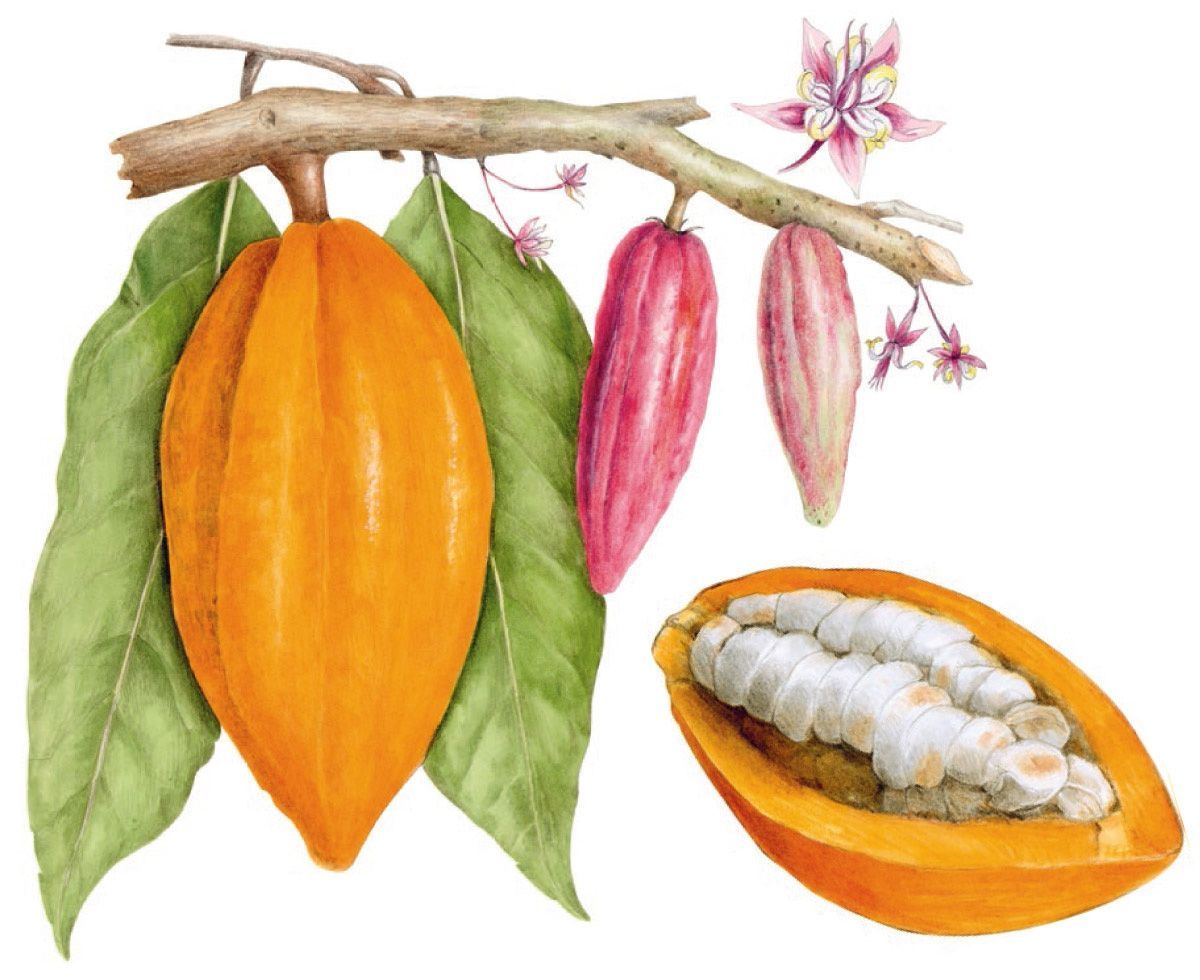
Image: Chocolate Tree, Cacao, or Cocoa Tree, (Theobroma cacao); (p. 69).
Hollender admits, “I don’t think I was in charge of this project, nor did I decide to take it on. Rather, it found me. I was inspired to try one painting of alliums, and once it was completed, I just had to continue. It often felt as if the plants were holding my hand and leading me on a journey of discovery and documentation.” The reader’s imagination is beguiled with lyrical quotes from contributors such as this one by Marta McDowell: “Most Apiaceae flowers look like the ribs of an umbrella shorn of fabric by gusts of wind and left abandoned on a city street corner.”
Hollender attributes her mother’s love of tulips as inspiration as a beginning artist, as well as a visit to the Netherlands to see where this group of plants sparked the first ever stock market crash. As I continued to delve into this book, favorable comparisons to Michael Pollan’s Botany of Desire and published studies of Beatrix Potter’s lovely renditions of fungi kept coming to mind. Whether your interest in plants is culinary, ethnobotanical, agricultural, or artistic, there will be stories within that spark curiosity, concern, and wonder. Hollender disarmingly confesses, “I don’t have the answers. I don’t know a whole lot of science. But I get to use my curiosity and hunger to learn and understand to find answers and make connections.” She is eager to share some of what she has learned in her long career of painting plants and share her process in creating this impressive book. And in the process she also gathered together a wonderful cohort of collaborators to generously share their expertise.
There is much study behind the creation of a good botanical painting. “Every time I look at an unfamiliar plant and use my plant family knowledge to put the plant in its proper family, I get very excited, giving a fist pump and little dance that only I see. It reminds me of how others get when following a sports team. For me, a new plant identification puts me in the win column every time.” After deciding on which families to include in the book, Hollender carefully researched how to locate the plant specimens she needed, acquired from all over the world. Hollender rearranged her schedule at a moment’s notice when one of her precious package of plants arrived.
Along with her illustrations, Hollender provides readers with cultural and ecological information about her selected plant families. For example, I learned that shampoo ginger (Zingiber zerumbet) was the original inspiration for shampoo and has been used as such by Hawaiians for over 1,000 years by squeezing the pods and rubbing the gooey substance into one’s hair. Hollender’s treatments of the Poaceae (grass family) and the Arecacaeae (palm family) include discussion of environmental challenges surrounding agriculture. “The oil palms turned into a true adventure for me. I chose two species to underscore the impact, both good and bad, these plants are currently having on our environment. Unfortunately, countless square miles of land have been deforested to plant monocultures of oil palms. In addition to the damage this is doing to delicate rainforest ecosystems, the palm oil derived from these plants is not the healthiest oil for humans to ingest and has been linked to several ailments…It is ironic that humans are destroying the environment by planting these palms that are used to make an exorbitant amount of cheap oil that is actually destroying the health of the humans that are cultivating and using it.” Hollender’s account of searching out a specimen of Cardamom (Elettaria cardamomum) is one of many examples of her resourcefulness and dedication to this five-year-long project.
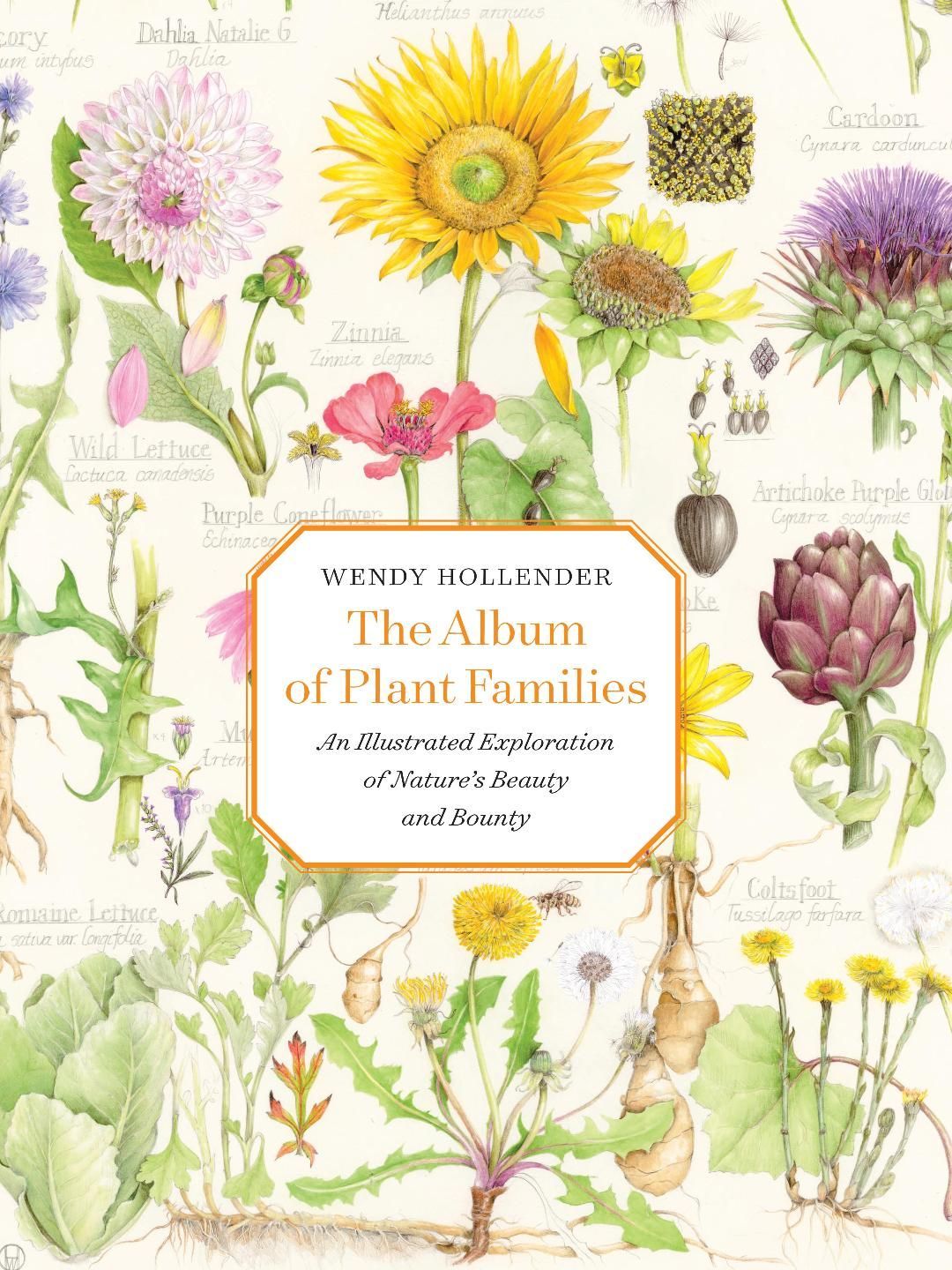
Image: Book Cover, The Album of Plant Families.
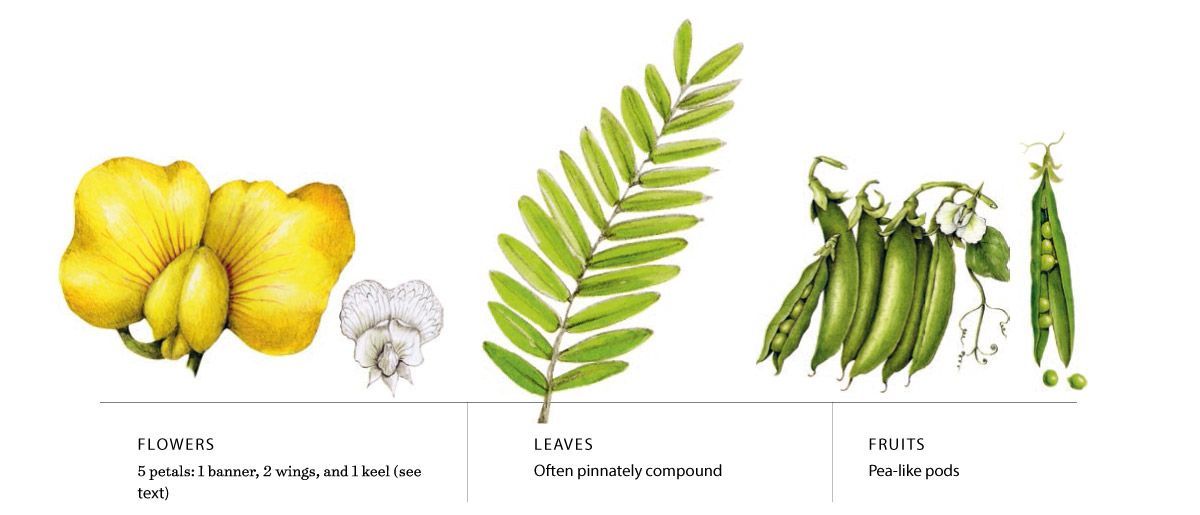
Image: Pea flowers, leaves, and pods.
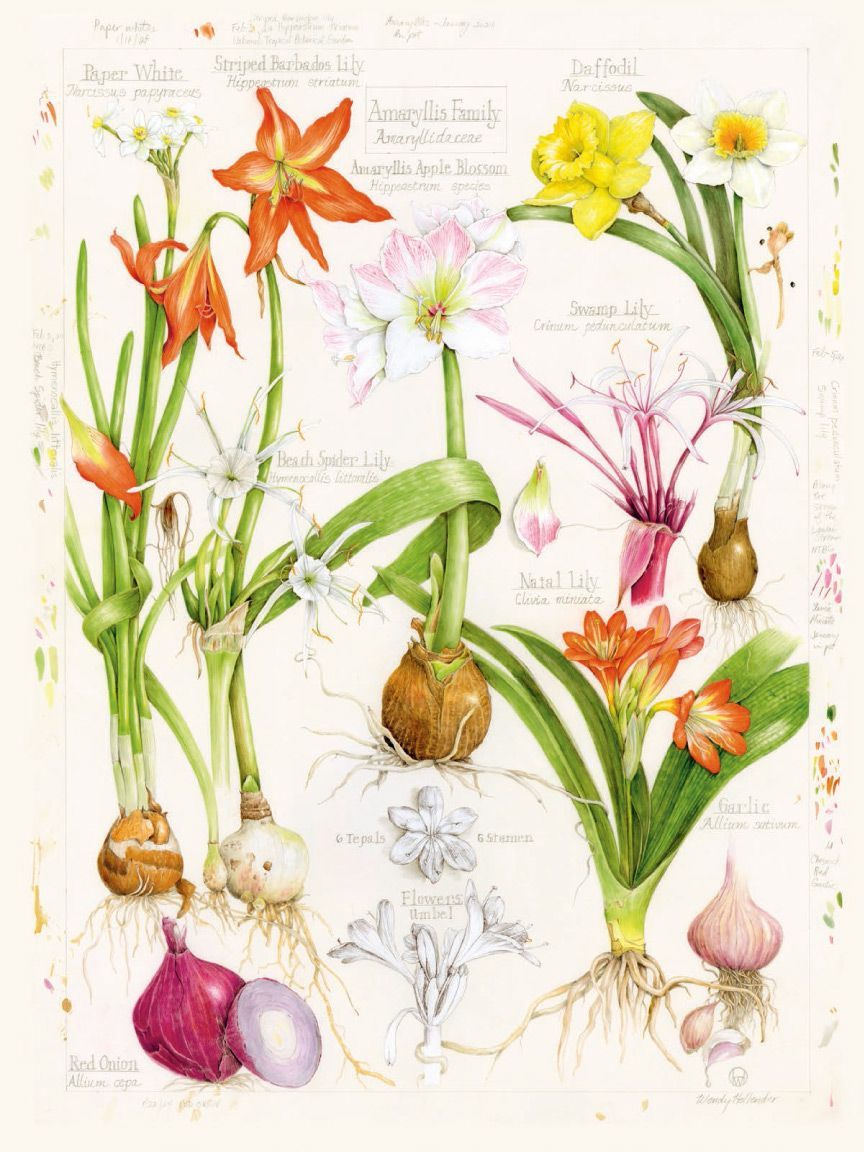
Image: Allium cepa, Red Onion; Allium sativum, Garlic; Clivia miniata, Natal Lily; Crinum pedunculatum, Swamp Lily; Hippeastrum, Amaryllis Apple Blossom; Hippeastrum striatum, Striped Barbados Lily; Hymenocallis littoralis, Beach Spider Lily; Narcissus, Daffodil; Narcissus papyraceus, Paper White; (p. 19).
In addition to information from her own research, the people that Hollender gathered to present their research on the plant families covered in the book offer an important counterpoint to her illustrations. For example, the essay by Lei Wann, director of Hawai’i’s Limahuli Garden and Preserve, clearly shows the human/plant connections that span millennia: “Ōlena (Curcuma longa) would often be a part of cleansing and purification ceremonies. This cultivar now grows in abundance in our botanical garden. The strains we have come from old wild populations left by our ancestors. The genetics of our strains are from the cultivars that came in canoes with our ancestors generations ago. In our garden, living collections are also living connections. When I use our ‘ōlena in Lima-huli for medicine, dyeing, or ceremonial practices, I can’t help but feel so deeply connected. Some say our genetic memory awakens—I think there is truth in that because if there weren’t, traditional medicine would not be alive in my daily life today.”
Dr. Dustin Wolkis’ essay on the Fabaceae and ex situ plant conservation shows us the economic value of preserving plant germ material in dedicated seed banks as a complement to in situ preservation of rare species’ natural habitats (in situ conservation). Wolkis is Scientific Curator of Seed Conservation at the National Tropical Botanical Garden and deputy chair for the International Union for the Conservation of Nature (IUCN), Species Survival Commission, Seed Conservation Specialist Group.
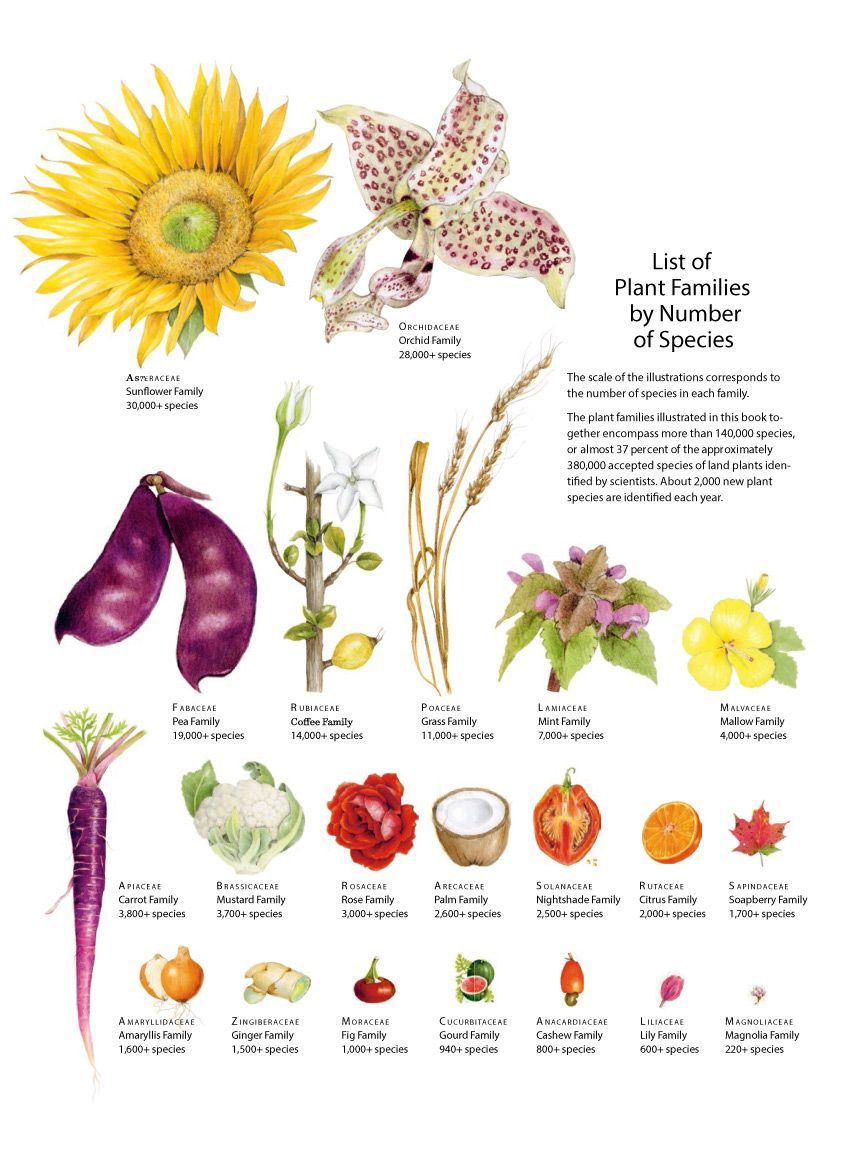
Image: Illustration of plant families scaled by size according to their number of species.
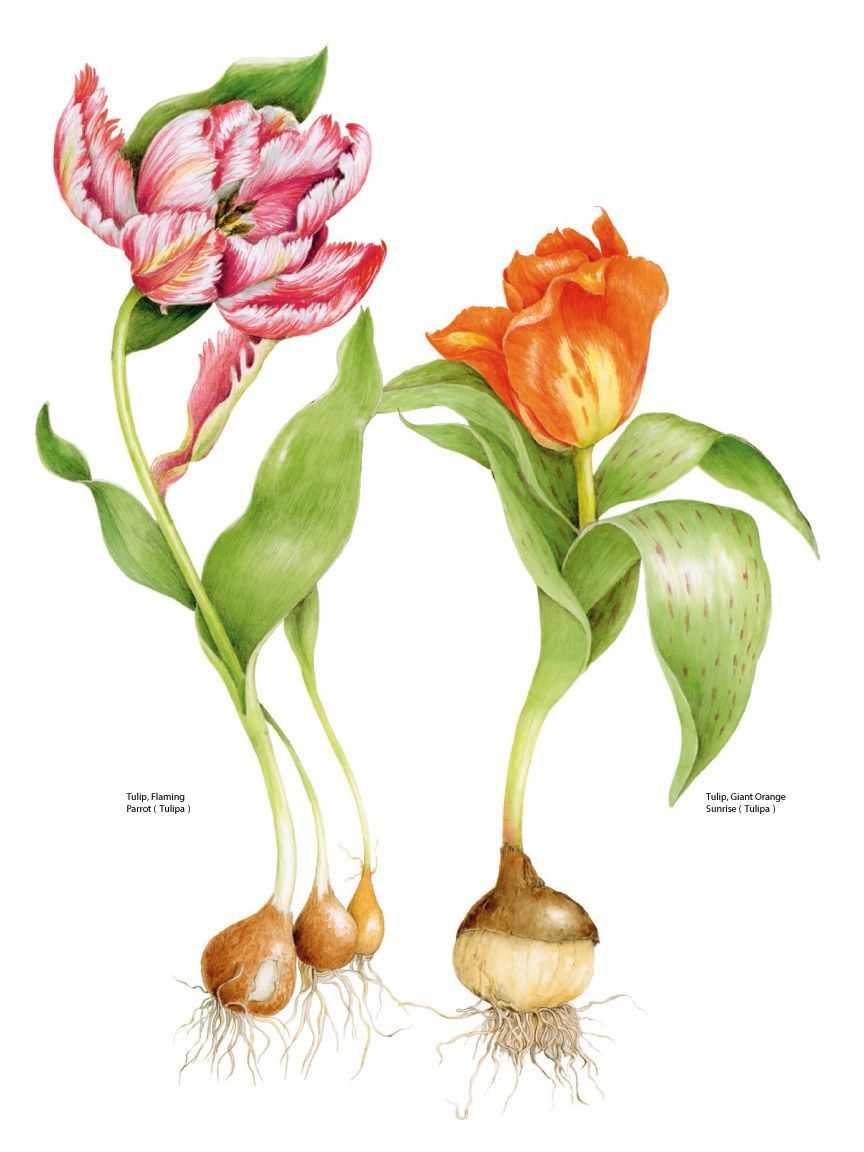
Image: Lily family, Tulips; (left) Tulip, Flaming Parrot, (Tulipa); (right) Tulip, Giant Orange Sunrise (Tulipa); (p. 57).
“Without plants, we could not survive; they are the structure upon which we humans rely for food, sustenance, resources for building and clothing, and the oxygen we breathe. These plants and the ways they’ve thrived over millions of years remind us that we are all part of something greater—a collective spirit composed of families, chosen families, and communities that support and nurture us. Just as the Asteraceae family, despite its vast diversity, finds harmony through its collective spirit, we too can find strength in community. Our webs of support thrive when we come together, each of us contributing something invaluable to the whole.” K Greene, founder of the Hudson Bay Seed Company.
It’s always exciting to get an advance copy of a new botanical art book! The lavishly-illustrated cover with the title in gold embossing gives a hint as to what to expect inside. The large scale of the book makes it a showpiece for any botanical bibliophile’ collection. The colors are luscious and the vellum finish of the pages makes them a delight to handle. While my editor’s eye found a few things that I would have red-penciled, none of them are important enough to detract from the book’s goal—to make the study of plants accessible and engaging to a wide audience, Enjoy this book, not as a scientific treatise on plant families and their identification, but as a delicious foray into human-plant relationships spanning a million years and more, and enjoy the accompanying essays in each chapter. “Nature is a built-in classroom for anyone to use. All you have to do is go outside and see what is happening. Take time to notice, and you will be amazed that every day there is a new lesson to explore with built-in questions and answers.” (p. 12).
Hollender, Wendy. (2026).
"The Album of Plant Families: An Illustrated Exploration of Nature’s Beauty and Bounty."
Abbeville Press, New York. 136 pp. Hard cover, 12 × 16 in.
ISBN 9780789215413.
The book can be ordered here: www.abbeville.com/collections/forthcoming/products/the-album-of-plant-families
This member-only article appears in the Journal of Natural Science Illustrators, Volume 58, no. 1 / 2026