

Blanding's Turtle Workshop
-Illinois Beach State Park Nature Center
—by Kathleen Garness and Sonya Siefering
Unless otherwise noted, all images © Kathleen Garness
Early in 2026, Illinois Beach State Park nature center director Chase Firth invited GNSI member Kathleen Garness to present nature arts workshops of her choice at the newly-reopened facility. With spring being peak migration time for many species of native animals, Kathleen invited Blandings’ Turtle volunteer monitor Sonya Siefering to teach workshop participants about the biology of these state-endangered turtles and their preferred habitats.
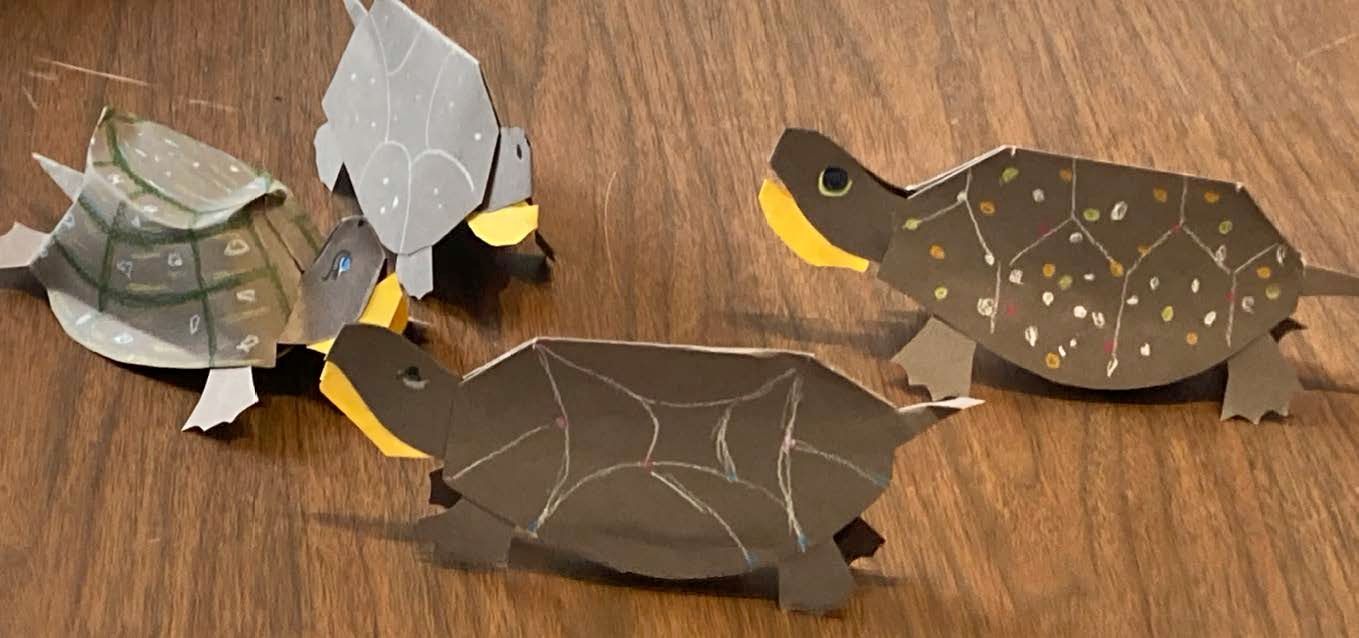
Above: Blanding's-patterned pop-up turtles created by workshop attendees.
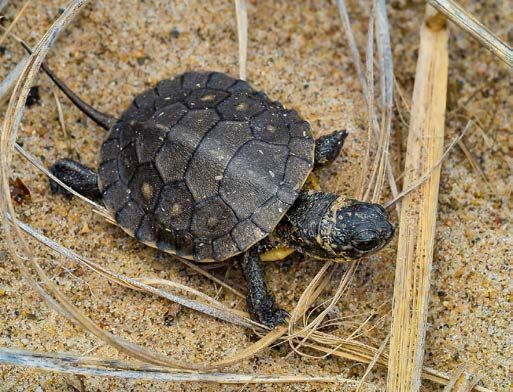
Juvenile Blanding's Turtle.
Sonya also volunteers for the Illinois Beach State Park natural areas restoration group, leads some of their natural areas workdays, and has become knowledgeable about the plants and animals that live there. By taking science to the people and getting people involved in the science, we hoped the participants would become very interested in Blanding’s Turtles and their habitat and want to help in their conservation. The goal of this nature arts workshop, held April 25, 2026, was to raise community awareness about this and other rare species.
Fewer than 500 Blanding’s Turtles (Emydoidea blandingii) remain in Illinois. Formerly common in wet, sandy areas throughout Illinois, the species was listed as State-Threatened in 1999 and elevated to Endangered in 2009 due to ongoing habitat fragmentation by agriculture and urban development. Viruses and bacteria also have played roles in their decline. Every year scientists from regional institutions gather in Lake County to census Blanding’s and other rare turtles, weigh them, and take saliva and blood samples to test for disease. Turtles are considered the most endangered vertebrates on the planet, according to a Chicago Tribune article from June 2026:
www.chicagotribune.com/2026/07/12/ illinois-endangered-turtles-scientists/
Illinois Beach State Park, which spans 6.5 miles along the shore of Lake Michigan, and is part of the Ramsar Convention-dedicated Chiwaukee Illinois Beach Lake Plain (a wetland of international importance), contains Illinois’ first nature preserve. The preserve was dedicated in 1964 and is home to almost 900 documented species of vascular plants, a portion of which are federally or state-listed as threatened or endangered. According to the eBird.org "Bird List", there are 319 species of birds just in the south unit of the preserve where the workshop was being held.
Also, there are many species of insects, reptiles, amphibians, and mammals who call the preserve home. With less than 1/10 of 1% of Illinois’ original prairie remaining, this 4,000 acre site is some of the last and largest remaining habitat for these rare species. Using an art activity in our informal nature arts workshop setting is just one way to educate new and curious audiences about the value of conserving both the habitats and its denizens!
Blanding’s Turtles are wonderfully visually compelling subjects for a nature arts workshop. The most unmistakable identifiers of Blanding’s Turtles are the bright yellow throat and chin, as well as the upward curvature of the jaw that gives them a confident, smiling appearance. When a Blanding’s is flipped on its back, it cranes its strong, yellow neck and pivots on its nose to right itself. There is a beautiful Anishinaabe story about Blanding’s,
The Turtle
with the Sun Under Its Chin, which teaches that quiet persistence and bravery can be the strength needed to overcome challenges. Blanding’s often bask in the sun and lift their head to show that beautiful golden chin.
The Blanding’s Turtle carapace (upper shell) is usually dark chocolate brown to olive, but rarely some Blanding’s are sandy blonde. The flecks on their shell are usually light yellow, but sometimes gold, orange and salmon. One female Blanding’s Turtle observed in the Lake Plain had a nearly black shell with tiny specks so light, it looked like a galaxy of stars on her shell. The Blanding’s plastron (under shell) is yellow to cream colored with black blotches that radiate in from the outer edges. Each plastron’s markings are unique, like a fingerprint, and help researchers and volunteers identify the turtles. However, in the Lake Plain wetland most of the Blanding’s plastrons are stained dark reddish brown from iron oxide in the wetlands, so the plastron markings can be difficult to use as identifiers.
Blanding’s Turtles can live to at least 95 years old, and females will lay eggs throughout their entire adult life. They are resilient creatures that survive despite: habitat loss and degradation; outsized populations of mesopredators such as raccoons; and human interference that include site-specific impacts, road mortality, poaching, and unleashed dogs. Thankfully there are areas within the Lake Plain that provide for the turtles’ need of large, connected wetland areas as well as open, sunny uplands. Hopefully this workshop helped provide meaningful education and fostered learning and emotional connection to the turtles that helped the participants understand better how to reduce human interferences and increase Blanding’s survival.
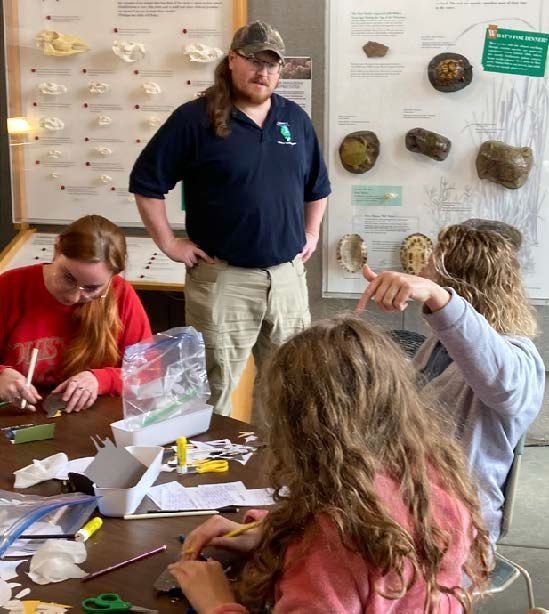
Image: Chase Firth, nature center director, offers participants an introduction to the ecology of Illinois Beach State Park.
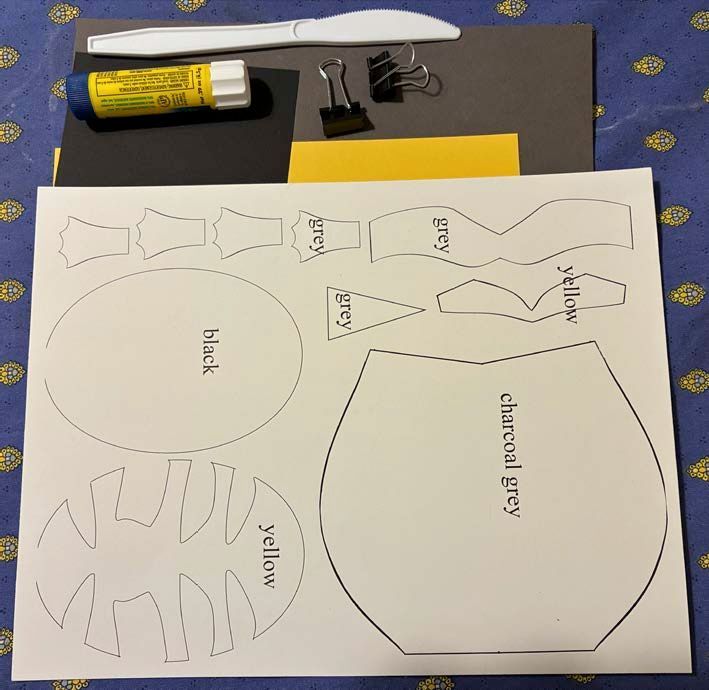
Image:
Project supplies including cardstock sheets printed with simplified shapes to be cut out and assembled as 3-dimensional models of Blanding's Turtle during the workshop.
Having taught with a series of mechanical paper structures (colloquially called pop-ups) in different venues the previous year, Kathleen brainstormed with Sonya how to create a simple but reasonably biologically accurate cardstock form that participants ages seven and up could enjoyably cut out and assemble while engaging in a discussion about the turtles’ visual characteristics and ecology. For other nature arts workshops, Kathleen had used a Cricut® mechanical cutter, with which she is able to very accurately produce intricate cutouts in various weights of paper including cardstock. For this workshop however, the shapes were simple enough that anyone with modest scissor skills could quickly and easily cut out the few shapes needed, and the time spent focusing on the task afforded some quiet time for Sonya to share her observations from monitoring the turtles.
The Wednesday before the workshop, Kathleen received a discouraging email from Chase Firth saying that only one person had registered so far; but by the morning of the workshop, it was filled up! With ten participants from ages eight to almost eighty, everyone expressed how much they learned from the class, while engaging in a fun, hands-on, art activity.
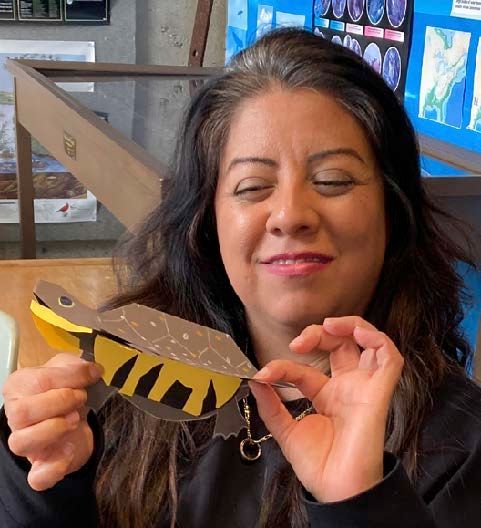
Attendee showcasing her final turtle structure.
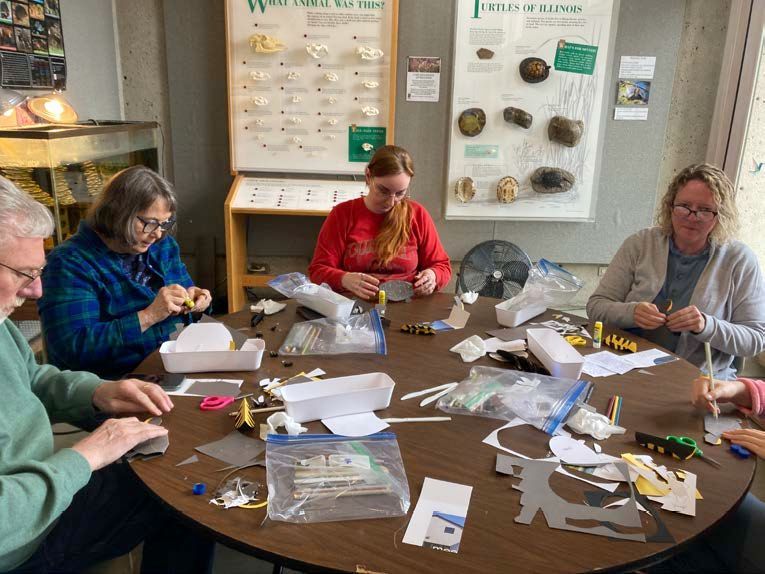
Group of attendees assembling their cutouts.
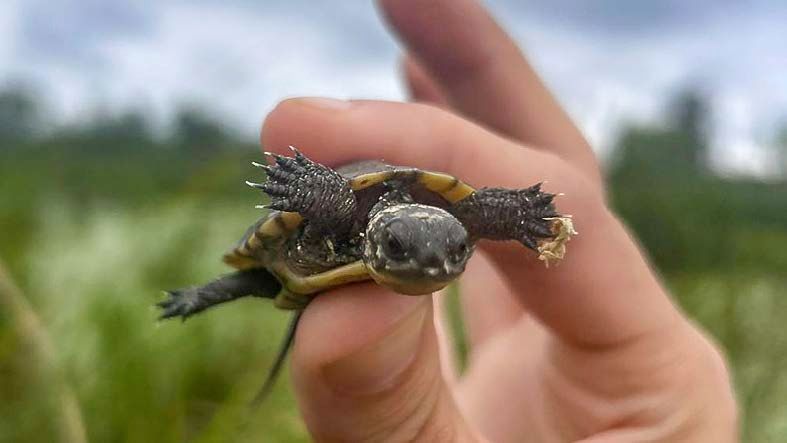
Juvenile Blanding's Turtle exhibiting cream colored plastron and yellow chin.
About The Authors
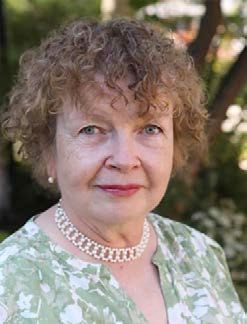
Kathleen Garness, in addition to her science illustration work, is volunteer steward of Hosah Prairie, one of the remnant dunesland sites within the larger Chiwaukee-Waukegan Beach Ridge Plain. Kathleen leads monthly restoration workdays that include learning about the plants and animals that live in the prairie.
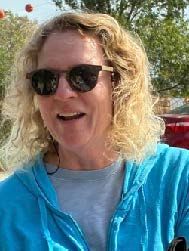
Sonya Siefering
is one of the region’s lead volunteer Blanding’s Turtle monitors, checking their nests, tracking their movements, and reporting any threats to the scientists heading up the research projects.